

After a period of intense uncertainty and volatility, the commercial real estate (CRE) market is finally showing signs of stabilization. Property values are resetting, construction pipelines have slowed, and capital markets are beginning to thaw. This shift creates a rare window for disciplined investors to step in and deploy capital into high-quality assets at attractive entry prices.
Market Dislocation: A Foundation for Opportunity
For investors exploring this changing landscape, it’s clear that the current market dynamics are a springboard for opportunity. With commercial property values having dropped meaningfully from their 2022 peaks—down around 10%–20% in several subclasses and even more in the office sector—there’s a compelling case for savvy investors to seize the moment (Display 1).
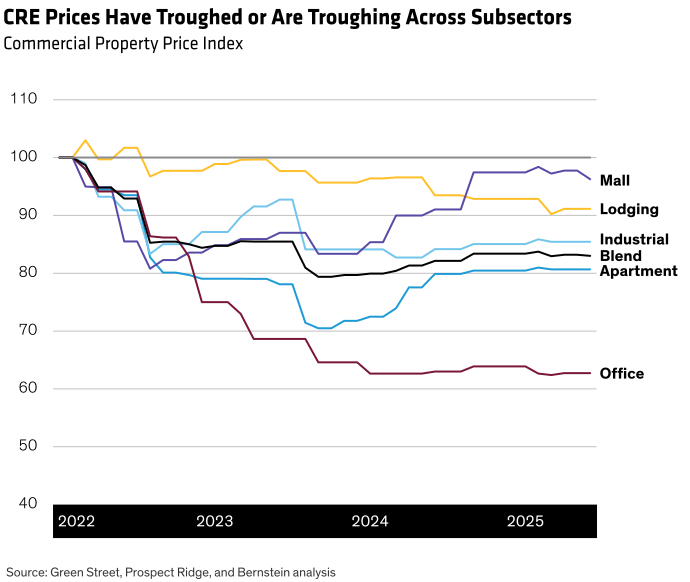
And while this reset has been painful for existing owners, it has opened the door to a more rational pricing environment for new investors. The gap between what sellers want and what buyers are willing to pay is narrowing, and we’re starting to see an uptick in transaction volumes, albeit from depressed levels.
At the same time, debt markets are gradually improving. Borrowers now have access to a wider range of lenders and better terms than they did during the tightest conditions of 2024. With the Federal Reserve signaling potential rate cuts ahead, the cost of borrowing may continue to decline, further supporting property valuations.
Supply Constraints and the Development Dilemma
One of the most important tailwinds for existing real estate holders is the dramatic slowdown in new development. Elevated construction costs, tighter financing conditions, and uncertain exit pricing have rendered many projects uneconomical. Consider the multifamily sector, where construction starts have plummeted by about 60% from their previous highs, and new deliveries are expected to drop substantially over the next several years (Display 2).
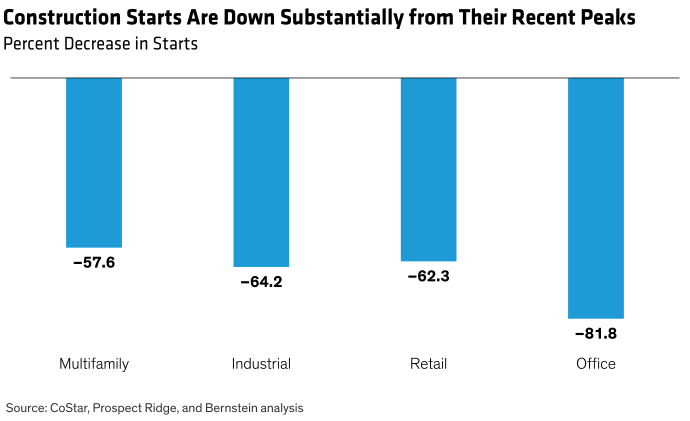
This constrained construction pipeline has an outsized impact on high-growth markets, where demand continues to outpace supply. As affordability issues persist in the homebuying market, the demand for multifamily rentals remains strong—especially for well-located, professionally managed properties. Investors who own or acquire existing assets in these markets stand to benefit from favorable supply-demand dynamics and the potential for rent growth.
Maturing Debt and Recapitalization Opportunities
Beyond the slowdown in development, a wave of commercial real estate debt is maturing in 2025 and beyond, with many borrowers facing refinancing challenges. Higher interest rates, lower valuations, and stricter underwriting standards are creating gaps in capital structures which must be filled with fresh equity. This dynamic is leading to a rise in recapitalization opportunities, particularly for well-financed investors who can offer speed and certainty.
In some cases, these situations involve motivated sellers or broken auctions (where bidding processes fail to attract competitive offers), meaning assets can be acquired at discounts to replacement cost. In other situations, investors may engage in friendly recapitalizations, injecting equity into stabilized properties that have solid fundamentals but require near-term capital. Either way, the ability to transact swiftly and with discipline is a key differentiator in today’s market.
Strategic Themes for Deployment
In this environment, successful real estate investment requires a careful and selective strategy. Several themes stand out:
- Focus on in-place cash flow: Assets with high occupancy and stable income are better positioned to weather economic uncertainty and offer immediate yield.
- Target supply-constrained markets: Regions with limited new development and strong demographic trends are likely to experience outsized rent growth and capital appreciation.
- Look for below-replacement-cost opportunities: Acquiring newer properties at discounts to what it would cost to build them today offers a margin of safety and upside potential, along with limited capital expenditure needs in the medium term.
- Prioritize attractive financing: Assumable fixed-rate debt at below-market interest rates can enhance cash yields and reduce risk.
Set Up for Success
Above all, investors should remain patient and disciplined. Not every deal is a good deal, and underwriting rigor is essential. The best chances often arise during times of market upheaval, but they require a clear strategy and strong commitment to follow through.
The commercial real estate market is still in transition. And while uncertainty still lingers over the broader economy, the conditions for a compelling investment environment are falling into place in CRE—think rational pricing, limited supply, and motivated sellers. For those with dry powder and a long-term mindset, now is a prime time to act—but it’s important to be strategic rather than indiscriminate.
As always, success hinges on being selective, maintaining underwriting discipline, and the ability to act decisively when opportunity knocks. While the quakes of recent years may have subsided, the foundation is still settling, creating opportunities for those who are ready to build on solid ground.
- Greg Young, CFA
- Senior Investment Strategist
- Christopher Brigham
- Senior Research Analyst—Investment Strategy Group