

Most DC plan participants share the same goal of a comfortable retirement. It’s the journey that differs and much depends on personal investment knowledge, risk comfort level and other qualities, according to the latest research by AllianceBernstein (AB).
What Kind of DC Plan Investors Are They?
Many industrywide defined contribution (DC) plan surveys offer “average” snapshots of participants or place them into generational buckets. However, we don’t think buckets or averages depict today’s diverse participant mindset and experience.
With this in mind, AB’s annual Inside the Minds of Plan Participants research consistently identifies three distinct investment personas: Capable, Eager and Conservative (Display). Each category is based on how much respondents agree or disagree with 14 statements in areas like finances, spending habits, time horizon and sources of financial advice.
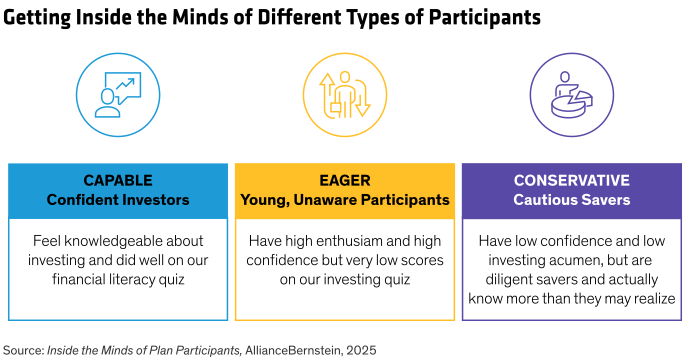
For the most part, each persona has been equally represented over the years. Moreover, the individual characteristics that shape each investor category can help plan sponsors move beyond an “average” perspective with plan initiatives and communication approaches that hit home on an individual level.
New This Year: Where Do Participants Turn for Guidance?
We’ve found that several key factors help distinguish among the three personas.
Capable investors seem very serious about investing and tend to go it alone. They’ve done their homework and it shows, but we think there’s still room for more guidance. For example, many Capables may be too aggressively postured in their investment mix and need timely reminders of the potential downside to taking too much risk.
Conservative personas are more savers than investors, with little appetite for financial risk and low confidence in their skills. Though they tend to skew older than Eagers, they have about the same average account balance, which is less than half the balance of Capables. It’s not as if Conservatives aren’t informed; in fact, we found they may underestimate their investment knowledge and might just need confidence building.
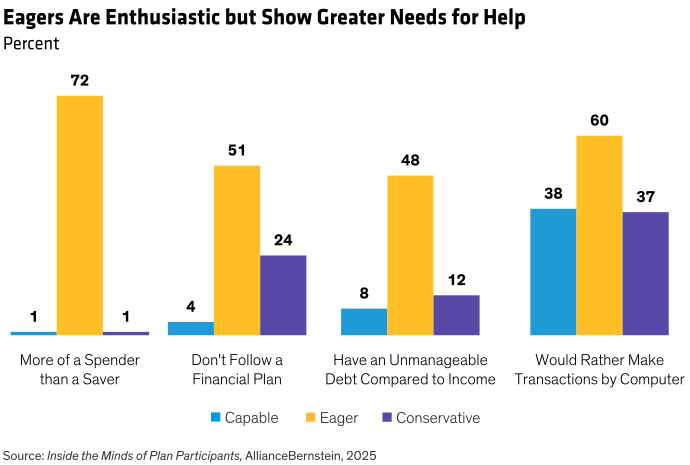
The Eager persona is an eclectic mix. They’re nearly as enthusiastic as Capables about investing enthusiasm but have less acumen. In sharp contrast to the other personas, Eagers identify more as spenders than savers, seldom follow a financial plan and are the most likely to carry high debt levels (Display). We think Eagers could use considerable help, perhaps through harnessing their enthusiasm and competitive drive by showing them ways to “win” at retirement.
While Eagers may not follow a formal plan, they do seek out advice—and from numerous sources. For example, about 60% of Eagers said they trust financial guidance from social media outlets—nearly double the other personas. Moreover, Eagers were the most accepting of AI-generated financial advice, with three out of four willing to act on it.
Eagers tend to skew younger—with less time in the retirement-saving game—but we think the other personas can learn something from their online trends. Greater AI adoption is especially promising, and we think it will play a larger role in effective sponsor engagement. And while social media dominates as a news source, sponsors are starting to see its power to educate and motivate participants.
Interestingly, participants still hold advice they get through their workplace in high esteem; even 64% of Eagers said they “trust and rely on” it.
Insights Into Persona-Friendly Plan Communications
Reaching participants through broad outreach efforts can be a strong starting point. After all, retirement income, market volatility and staying ahead of inflation are relatable topics to everyone on some level.
But it’s important for sponsors to connect with participants on their personal terms: unique hopes, habits and other personal drivers. It helps to use a broad range of media, from on-site to online, and include social outlets for reasons mentioned above. Also, subtle variations on a consistent message and action steps can go a long way to breaking through and boosting engagement across all personas.
We think the biggest window of opportunity for improvement lies in the Eager and Conservative personas, who tend to lean in either too much or not enough. Plan sponsors may want to focus their efforts—or at least tilt some communications—toward both groups to help them take meaningful steps toward better outcomes.
Although the three personas differ in many ways, they want the same result: lifelong financial security. We believe that connecting with their unique qualities—rather than an average participant—is the best course to that end.
Interested in how we uncovered each persona? Take the quiz.
- Jennifer DeLong
- Managing Director—Head—Defined Contribution
- Heather Balley
- Director of Participant Communications—Defined Contribution
“Target date” in a fund’s name refers to the approximate year when a plan participant expects to retire and begin withdrawing from his or her account. Target-date funds gradually adjust their asset allocation, lowering risk as a participant nears retirement. Investments in target-date funds are not guaranteed against loss of principal at any time, and account values can be more or less than the original amount invested—including at the time of the fund’s target date. Also, investing in target-date funds does not guarantee sufficient income in retirement.