

Planning a wedding is equal parts champagne bubbles and low-grade panic. Big celebration or intimate affair? Grand entrance or quiet elopement? How do you honor your vision while keeping family happy—and then, just when you think you’ve nailed the seating chart, there’s the prenuptial agreement.
You know it can offer clarity and protection, but how do you even bring it up? You may want to “keep it one hundred on the land, the sea, the sky,”[1] but you also want to plan clearly for your financial future as a married couple. For a thoughtful approach, consider this prenup exercise.
Lean into Values—Not Legal Jargon
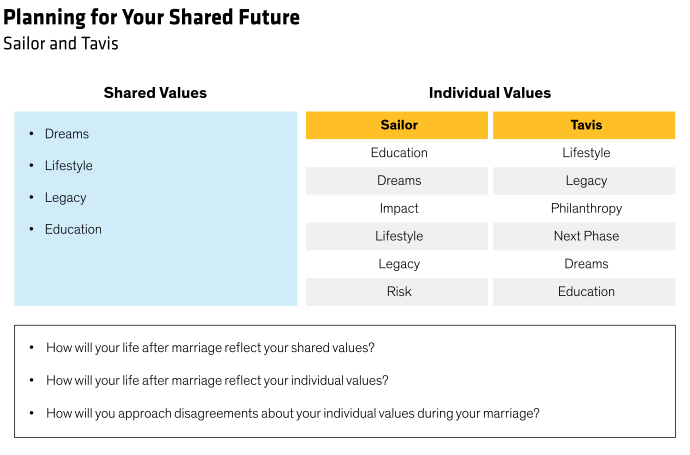
When a conversation feels loaded, it can help to zoom out before getting specific—starting not with legal terms, but with values and priorities. Take Tavis and Sailor, a recently engaged couple who asked their Bernstein team to help guide an early conversation about a prenup. Rather than opening with balance sheets, the team begins with something simpler: a deck of cards, each printed with a single word—“legacy,” “education,” “lifestyle,” and more.
Next, Tavis and Sailor each rank the cards based on what matters most as they imagine their future together. Sailor, an English teacher[2] and part-time poet, puts education and (wildest) dreams[3] at the top. Tavis, a gym teacher thinking about retirement,[4] gravitates toward lifestyle and legacy. As they explain their choices, shared priorities start to emerge—just expressed differently. Sailor talks about wanting “a couple of kids” and a “driveway with a basketball hoop” as part of her dreams for the future.[5] Tavis lights up describing future children and how much joy they’ll bring to his extended family as part of his larger legacy and theirs. Different language, same picture.
Mine vs. Ours
From there, the conversation turns practical. The couple recognizes that a strong prenup clarifies what property stays separate, what property becomes marital, and how future earnings and other income will be treated. But how will they source funds for their shared versus individual priorities?
Sailor loves international travel and wants to make changes to the home she bought prior to their relationship;[6] Tavis values time with his brother and nieces. Should Sailor’s solo trips and home improvement costs come from separate funds? What about Tavis’s family visits, including those attended by Sailor? And then there’s the possibility of career changes. If they have children, will one of them stay home for a time, or will they rely on childcare? How would that affect their finances? If they currently split their shared, day-to-day expenses evenly, what happens if one spouse is no longer earning an income? As they talk it through, they begin to unpack what feels like “mine” versus “ours”—a distinction at the heart of any prenuptial agreement (Display).
Subtle Cues
Next, the Bernstein team invites them to reflect on the money messages they grew up with—and the ones they want to pass on (Display). Tavis chooses “be grateful for what you have,” a mindset he credits with why he’s still teaching at a school he loves despite higher-paying options.[7] He also selects “it’s your responsibility to give back,” reflecting his passion for philanthropy.[8] Sailor identifies with “money can’t buy happiness,” a belief she says helped her focus less on wealth and more on finding someone to share her life.” Looking ahead, she adds, “you have more than money to offer”—joking that she doesn’t want future children (or their partners) obsessing over inheritances.[9]
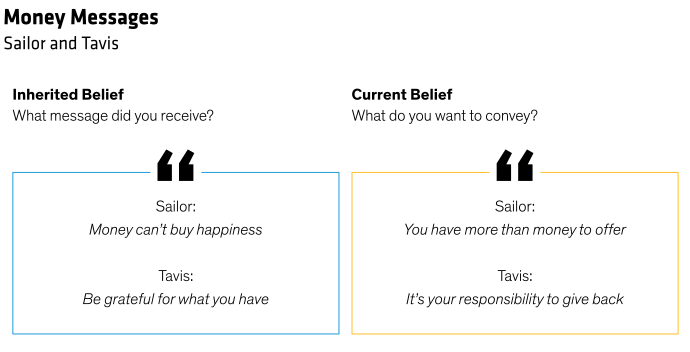
Once again, different expressions reveal shared ground. Whether framed as gratitude or perspective, both see wealth as a tool—not the point. To turn that belief into action and family tradition, they decide to give a set percentage of their shared wealth to charity each year and involve their future children in the process. They also agree that wealth should support experience and community, leading them back to a deeper discussion: which experiences are essential to a happy home life and individual fulfillment. They decide to factor these experiences into expenses paid from marital funds and commitments to one another regarding the other’s lifestyle even if the marriage were to end due to divorce or the death of one spouse.
Building Your Skills
As they wrap up their conversation with the Bernstein team, Sailor and Tavis acknowledge that they haven’t solved everything and there’s still work to do. But they’re encouraged by the progress they’ve made in articulating a shared vision—and are relieved to find that this process was not as daunting as they first thought! They commit to further refining their mutual understandings with the help of experienced legal counsel and incorporating these understandings into their prenuptial agreement. Because their conversation is rooted in their values and priorities, it feels like they are doing more than talking about a legal document. They’re building the skills they’ll need as a married couple to create a joint future on their own terms, deciding together—“this is our place, we make the rules.”[10]
- Jennifer B. Goode
- Senior National Director—Institute for Trust and Estate Planning
- Kristen Nelson
- Managing Director—Private Client
- Morgan Campbell, CFA
- Director—Wealth Strategies Group
[1] https://genius.com/Taylor-swift-the-fate-of-ophelia-lyrics
[2] https://www.instagram.com/p/DN02niAXMM-/ (“Your English teacher and your gym teacher are getting married”)
[3] https://genius.com/Taylor-swift-wildest-dreams-lyrics
[4] https://thespun.com/news/travis-kelce-announces-his-plan-for-retirement-decision
[5] https://genius.com/Taylor-swift-wi-h-li-t-lyrics
[6] https://pagesix.com/lifestyle/inside-taylor-swifts-rhode-island-vacation-home/
[7] https://www.foxsports.com/stories/nfl/chiefs-star-travis-kelce-knows-hes-underpaid-but-simply-says-i-love-winning
[8] https://news.nationwide.com/travis-kelce-wins-nationwides-charity-challenge/#:~:text=Travis%20Kelce%2C%20a%20tight%20end%20for%20the,areas%20like%20STEM%2C%20entrepreneurship%2C%20and%20the%20arts.
[9] https://genius.com/Taylor-swift-anti-hero-lyrics (“I have this dream my daughter-in-law kills me for the money/she thinks I left them in the will”)