

A transformative wave of innovation is reshaping the landscape of work, fueled by advancements in cloud computing, artificial intelligence, and robotics. Investors are eager to capture the upside, but much of the value is created before companies go public. That’s why venture capital and growth equity serve as crucial entry points to fund these emerging AI opportunities, allowing investors to tap into the forefront of innovation. To succeed, investors need a thoughtful approach, focused on elite manager access and optimal fund structures.
Value Creation Increasingly Happening in Private Markets
Young, growing companies used to go public early in their lifecycle, driven by their need to access growth capital while offering secondary liquidity to early investors. Notably, it took mega-cap companies like NVIDIA, Netflix, and Tesla over 10 years post-IPO to become “decacorns” (companies with a $10 billion market capitalization).
Today, that dynamic has clearly shifted. Becoming a public company has grown less attractive, given the heavier regulatory burdens, governance requirements, and constant drumbeat of quarterly accountability to short-term-oriented investors. Meanwhile, private markets have become increasingly robust, offering numerous ways for companies to finance future growth without the hassle.
Consider that over the past 20 years, the number of publicly listed companies has fallen while the ranks of venture‑ and private-equity‑backed firms have surged (Display). At the same time, private companies are staying private longer, with the median age at which companies go public steadily rising.
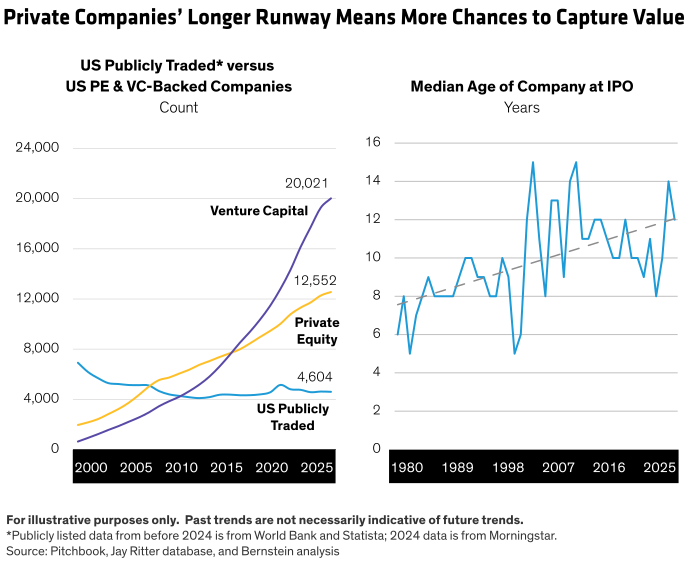
The bottom line when looking for AI funding opportunities? An increasing amount of value creation and capital growth from innovative, fast-growing companies is occurring outside the public markets, leaving those investors at a disadvantage.
How VC Is Fueling the AI Era
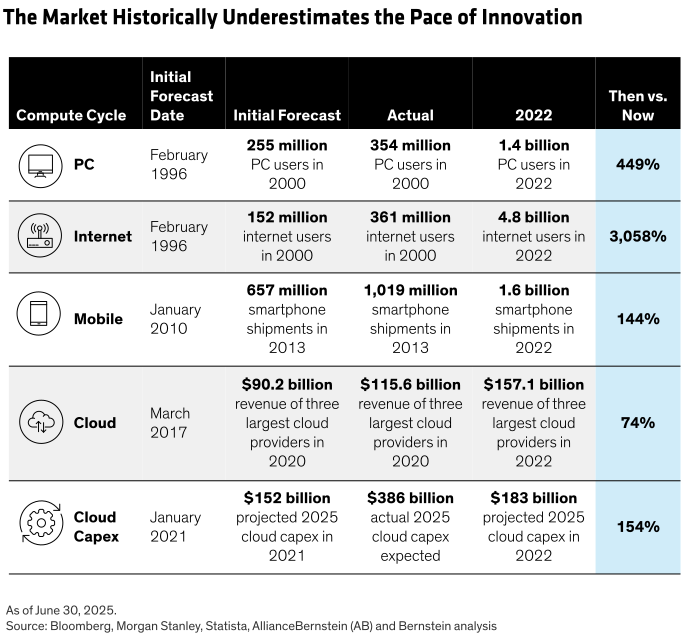
Venture capital has long financed transformative technologies, from the PC to the mobile internet. Today, that engine is focused squarely on artificial intelligence. In fact, almost two-thirds of VC/growth funding is currently targeting AI-related investments.[1] What makes this wave different? Not just the pace of adoption, but the sheer scale of the opportunity.
In previous innovation cycles, the unlocked markets measured in hundreds of billions of dollars (Display). Now, artificial intelligence is projected to touch nearly every sector of the global economy, with potential market opportunities measured in the trillions. That’s partly because AI isn’t a vertical technology. It’s a horizontal platform that can be embedded across industries—from healthcare and finance to manufacturing, logistics, and consumer applications.
The AI Multiplier Effect
Importantly, AI advancements are also acting as enablers in adjacent fields. In life sciences, for example, AI is transforming drug discovery, diagnostics, and personalized medicine by dramatically reducing the time and cost required to analyze complex biological data. This multiplier effect means that AI is creating its own vast market while amplifying innovation in other domains, expanding the investable universe far beyond what previous waves of technology achieved. These new opportunities will need capital as they generate substantial value for both society and investors.
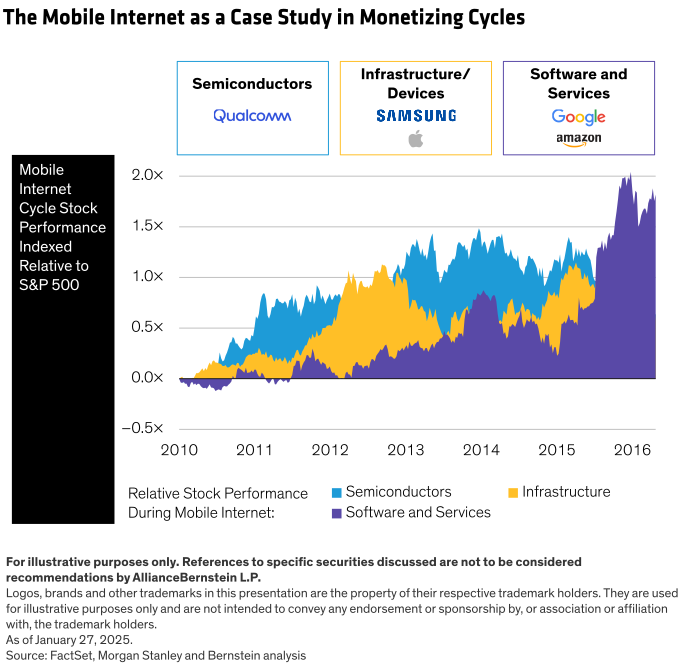
AI’s breadth means that the opportunity set for venture investors is significantly larger than in prior cycles. Over the next several years, venture funds will deploy capital into AI across three‑ to five‑year investment periods. That pacing is important: it allows managers to adapt as valuations shift and the types of companies being formed evolve. Just as mobile phones spawned multiple monetization models—starting with semiconductors then moving to device manufacturers and software providers—we will likely see successive waves of AI funding opportunities, but on a far greater scale (Display).
Manager Access Matters
While early exposure is crucial, how you invest makes a big difference, too. Dispersion between venture funds is far higher than in public markets. The difference in long‑term returns for top‑ and bottom‑quartile venture managers can exceed 30 percentage points, compared to just a few points for asset classes like global equities and bonds (Display).
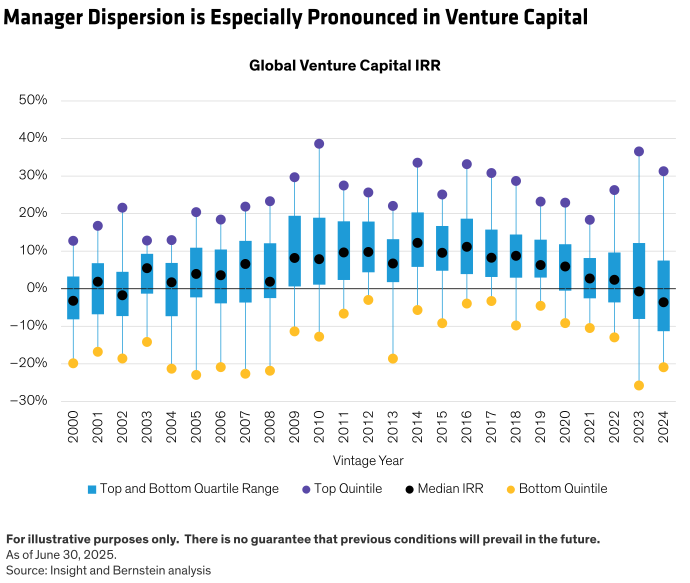
In other words, when weighing AI funding opportunities, manager selection is vital. The most promising companies tend to be highly selective when it comes to choosing their investors, with endorsements from Tier 1 venture firms offering not only capital but credibility, networks, and strategic guidance. Yet, Tier 1 venture capital managers are notoriously hard to access. They raise limited amounts of money and boast hugely oversubscribed funds, which makes building relationships with them exceptionally difficult. Despite these challenges, access to top‑tier firms is a must for astute investors seeking strong venture returns.
What’s the Ideal Fund Structure for Venture Capital?
While venture capital offers access to some of the most innovative, fast‑growing companies, it comes with meaningful trade-offs: long lockups, elevated costs, and delayed return profiles. Funds often require a decade or more to fully cycle, reflecting the time needed for young businesses to mature and exit.
That’s why aligning time horizons with investment structures is key for long‑term investors. Closed-end funds, for example, are ideal for venture capital because they accommodate its lengthy lifecycle and allow for disciplined capital deployment without the pressure of redemptions. In contrast, structures like interval funds—which offer periodic liquidity—do not work well, as they may force managers to sell holdings prematurely or hold excess cash, undermining the long‑term nature of venture investing. Evergreen funds also face challenges, particularly with valuations, as the net asset value (NAV) of portfolio companies can fluctuate significantly between fundraising rounds. Take OpenAI, whose valuation climbed from $300 billion in March 2025 to $500 billion by October 2025—a 67% increase in just eight months. Allowing new investors into a fund holding OpenAI during that period would have diluted the returns for existing investors who came in before March 2025.
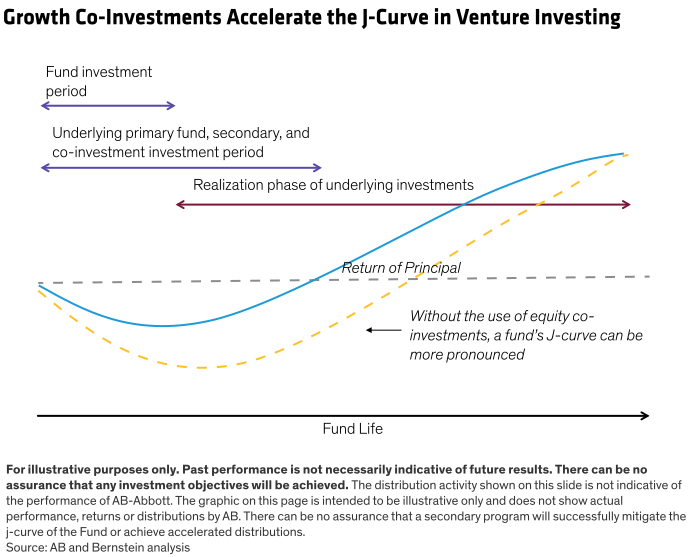
Co‑investing in growth-stage companies that are profitable and still experiencing high revenue growth is a powerful complement to closed-end venture capital fund investing, both in terms of fees and timing. By investing directly alongside established managers—often at lower fee levels and reduced carried interest—investors can lower the overall cost of their venture allocations. Co‑investments also accelerate capital deployment and returns, helping to shorten the traditional “J‑curve” associated with venture investing (Display). Typically, these investments are held for 4–6 years versus the 10+ years that’s common for early-stage venture funds to return capital. Additionally, co-investing in growth-stage companies can also enhance the risk-adjusted returns of an early-stage venture portfolio due to lower loss rates.
The Best Way to Tap into AI Innovation
The center of gravity for value creation in disruptive companies has shifted decisively to private markets. With fewer companies listing publicly and the median age at IPO steadily rising, much of the capital appreciation which public equity investors once captured now occurs there. This shift means that portfolios focused solely on public equities risk missing out on the most dynamic stages of growth.
At the same time, new waves of innovation, especially in artificial intelligence, are reshaping industries and creating entirely new business models. Seizing these AI funding opportunities requires more than just capital; it demands highly selective access to the right managers.
For investors looking to complement traditional portfolios, venture capital and growth equity offer a disciplined way to participate in the next era of innovation. By focusing on selective access to leading managers via closed-end vehicles—and thoughtfully incorporating co‑investments—investors can position themselves to benefit from the value creation increasingly happening outside of public markets.
- Benjamin Goetsch
- Senior Investment Strategist—Investment Strategy Group
- Wrug Ved
- Senior Investment Strategist—Investment Strategy Group
[1] https://pitchbook.com/news/articles/investors-are-plowing-more-money-into-ai-startups-than-they-have-in-any-other-hype-cycle#:~:text=AI%20startups%20now%20account%20for,of%2015.1%25%20in%20Q1%202017.