

What happens when family loyalty clashes with business ambition? In the world of family offices and family-owned enterprises, poor governance can turn cherished relationships into battlegrounds, threatening both the business and the family’s legacy. Yet, when done right, governance can transform potential conflicts into lasting unity—addressing family interests, operational demands, and ownership responsibilities.
At the heart of this balancing act lies the board of directors, the pivotal link between owners and management, overseeing leadership and setting the strategic direction with a clear vision rooted in family values. Central to their success? The implementation of formal policies that ensure employment in the business is managed thoughtfully and equitably. Without these structures, even the most successful businesses and strongest family ties can unravel under pressure.
What to put in a family employment policy
Think of a family employment policy as a proactive governance tool that helps prevent future conflicts among family members, management, and employees. These policies set clear, transparent rules for the terms and conditions of family member employment—spelling out what it takes to join, stay in, and exit roles in the business. Typical provisions include minimum education, relevant work experience, and age thresholds before someone can join. The goal is to promote professionalism, protect meritocracy, and build continuity across generations.
For some owners or family office leaders, employment is where “family” and “money” collide. An unclear hiring standard can turn into unplanned compensation, creeping entitlement, or uneven performance. Put simply: a family employment policy is a practical risk-control tool that reinforces disciplined stewardship while preventing hard feelings from spilling over to shareholder decisions.
How a family employment policy works in practice
In our work across family office wealth management and with family-owned enterprises, well-documented family employment policies are one of the best kept secrets. Among those that have them, some put the policy in place early in the business life cycle. For others, the policy evolved over time as the needs of the family—and the family business—dictated.
One family we spoke with described how their business’ employment policy emerged to create on-ramps that let the next generation learn without turning the business into a default employer. “When we did our first round of family council planning, we saw we had 19 kids coming up in the next generation and we didn’t want everybody to raise their hand and say, ‘give me a job’…and one of the best practices in family business is go work in somebody else’s business first. And get a sense of self-worth and self-esteem by doing that and then bring your talents back to the family business. But we required between 5 and 8 years. Merit and interest are two of the determinants of whether they would be a good fit, and most of the people in the fourth generation just went off and developed their own very successful careers...You know, we’re in a tough, dirty business…they don’t necessarily want to come back and work in a warehouse on the night shift in order to learn.”
Another participant—a fourth-generation family member involved in a large retail business in Central America—put it this way: “Not everyone can work at the family business unless they have specific requirements, they have to work somewhere else, they need to have relevant experience for a few years, and they also need to have a master’s degree in business or a related field in order to join the company or have the ability to climb up the ladder. So, yes, we’ve always given priority to the health of the business, and then, of course, helping out the family as we can but not at the expense of the business.”
Several emphasized the need for rising family members to see firsthand how the family business operates. One family underscored that their employees “are an extension of our family—we treat them like family” when explaining why younger family members need to fully appreciate the role that all employees play. Incorporating an internship and an employment policy into their governance plan provided clear pathways to achieve this goal.
Why family employment policies help attract top talent
In one case, a transitional moment in the family business left the company without an active family member due to an untimely death. In that moment, it was clear that no family member was ready to step in as CEO. As a result, the family pivoted and decided to adopt a new governance strategy that was 100% professionally managed. “We feel this policy helps us attract and retain exceptional talent. One of the first questions C-suite candidates ask is whether or not there is a family member working in the company. There is a perception that family employment creates different working dynamics.”
Another family now has clear rules that detail compensation, qualifications, and exit rules—all flashpoints that can derail family offices or family-owned enterprises. Once finalized, the family amended the constitution to include the new rules and distributed the document to all members. Via the family council, they also conveyed their desire that non-family members be held to the same standards.
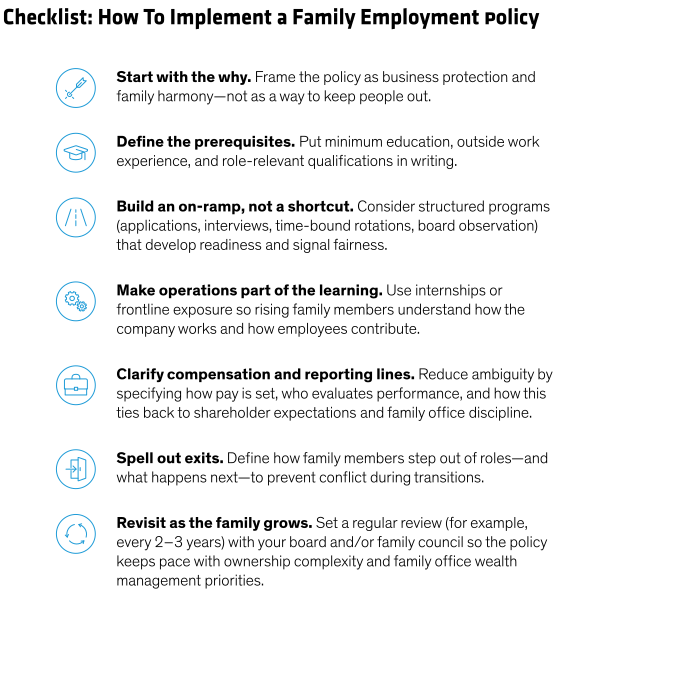
Ultimately, family employment policies help achieve a powerful balance—bringing professionalism to the forefront without sacrificing the family’s core sense of purpose and providing meaningful support to family members without jeopardizing the health and success of the business. This approach not only safeguards the family’s legacy but also paves the way for sustainable growth and harmony across generations.