

In a world full of uncertainty, we can’t predict what tomorrow holds, but we can take steps to protect our loved ones when we’re gone. Estate planning isn’t just for the wealthy; it’s for anyone who wants to secure their legacy, ease the burden on their family, safeguard privacy, and make sure their wishes are honored.
Several key documents form the foundation of an effective estate plan, which helps manage your affairs if you become incapacitated and guides the proper transfer of your assets upon your death. Each document plays a distinct role: detailing how your assets will be distributed, who will receive them, and when the distributions will occur. These documents also identify those responsible for carrying out your wishes, ensuring that your intentions are honored in the way you have specified.
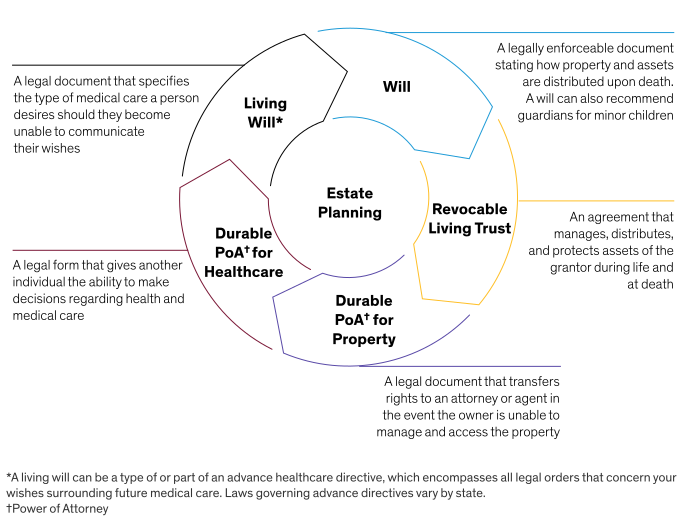
While understanding and preparing these documents is critical, it’s equally important to avoid gaps or errors in your plan. Even those in the public eye—with access to expert advisors—have made costly mistakes that serve as powerful reminders for us all. What lessons can we learn from them? Let’s explore some recent cautionary tales that prove fame and fortune don’t guarantee foresight.
Aaron Carter—No Will, No Control
Pop singer Aaron Carter died in 2022 at the age of 34, leaving behind a young son. Having died without a will, the California courts designated Carter’s infant son as the sole heir of his estate. Because minors can’t manage assets, the court had to appoint a guardian to oversee all aspects, including decisions about asset management and distributions to Carter’s son. If Carter had made a will beforehand, he could have specifically chosen the individuals making these decisions, as well as who should raise his son if his son’s mother became unavailable. It is important to understand that every decision regarding the estate falls under a guardian’s discretion; Carter missed his opportunity to thoughtfully pick the individual filling this role. Additionally, administrative and legal costs could significantly reduce the value of the assets his son receives.
Lesson: Estate planning should not be left unaddressed, no matter your age, health, or wealth. If you die without a will, the state distributes your assets pursuant to a set of default rules. For anyone with children, a partner, or any assets at all, creating even a basic estate plan is crucial to protect loved ones from unnecessary legal complications during an already difficult time.
Jimmy Buffett—Avoiding a “Margaritaville” Meltdown
Musician Jimmy Buffett passed away in 2023, leaving behind an estate valued at approximately $275 million. His estate plan was carefully crafted to provide for his loved ones and manage his substantial assets, which included music royalties, real estate holdings, and significant business interests in the hospitality sector.
Buffett’s plan placed these assets into a marital trust designed to support his spouse throughout her lifetime. Upon her passing, the remaining assets would be inherited by his children. To administer the trust, Buffett appointed his longtime accountant and business manager as a co-trustee of the marital trust to serve alongside his spouse.
While this arrangement seemed solid on paper, it soon became a source of conflict. Disagreements between the business manager and the surviving spouse escalated, resulting in lawsuits and countersuits. The legal actions included allegations of mismanagement and breach of fiduciary duty, highlighting the challenges that can arise even within a well-intentioned estate plan.
Lesson: The best estate plans anticipate conflict, especially when multiple heirs and complex family dynamics are involved. Even best laid plans can unravel if relationships, expectations, and communication aren’t clearly addressed ahead of time. When considering your estate plan, understand that trustees may disagree and, in some contexts, need to be removed and replaced. Who would you like to have that power? In the event of a disagreement between trustees, who wins? In the end, transparency and communication are just as important as legal precision.
Lisa Marie Presley—Secret Amendments, Public Battles
When Lisa Marie Presley passed away in early 2023, her estate became the subject of a contentious legal dispute within her family. The conflict began when her mother, Priscilla Presley, challenged a 2016 amendment to Lisa Marie’s revocable trust which removed both Priscilla and a former business manager as trustees and instead appointed Lisa Marie’s children in their places. The assets at the center of this change included the iconic Graceland estate in Memphis, along with valuable memorabilia such as costumes, cars, and awards.
The heart of the dispute revolved around the validity of the 2016 amendment. The former trustees argued that they hadn’t been notified of the change and raised concerns about the authenticity of the signatures, the presence of witnesses, and Lisa Marie’s true intent. These questions led to a highly publicized legal battle over who was rightfully entitled to manage the trust and its substantial assets.
Ultimately, the parties reached a settlement, leaving Lisa Marie’s daughter as the sole trustee. This resolution brought the legal wrangling to a close, but not without significant public scrutiny and family tension.
Lesson: Changes to estate plans—especially those involving family, high-value property, or legacy assets—must follow all formal requirements in the relevant estate planning documents and be documented with absolute clarity and transparency. It is essential to follow instructions, inform all relevant parties, adhere strictly to legal protocols, and communicate openly to prevent misunderstandings that could lead to litigation.
Tony Hsieh—Mysterious Will
When Zappos CEO Tony Hsieh succumbed to injuries following a 2020 house fire, his family initially had no knowledge of a will. As a result, the administration of the tech entrepreneur’s $500 million estate fell to his father, who was left without any clear direction. For years, Hsieh’s family faced the challenging task of sorting through a complicated web of handwritten notes that promised inheritances to friends and colleagues, as well as verbal agreements regarding investments in various business ventures.
The situation became even more complex when a mysterious will surfaced and was delivered to a Nevada law firm five years after Hseih’s death. This document, signed and dated in 2015, provided a legal record of his final wishes. The will transferred assets to a series of trusts, outlined specific donations to various organizations, and included a no-contest clause stipulating that any family member who challenged the terms of the will would receive nothing.
Lesson: The ability to have a dialogue about your planning and intentions with those who are impacted is a gift that is only available during life. Leaving your intentions open to interpretation carries significant risk and can lead to confusion and conflict. A formal, witnessed will—and assurance that a trusted party knows where to find it—is the only way to ensure your wishes are honored.
Final Thoughts: Don’t Leave It to Chance
Estate planning is about control. Control over your assets, your privacy, your legacy, and the emotional well-being of those you leave behind.
So ask yourself:
- Are my documents up to date? Do I regularly review my planning?
- Do my loved ones know my wishes? Have I memorialized them in a document that explains the reasoning behind the decisions made? Do my beneficiaries know where to find this document?
- Who will be named as trustee and are they prepared to manage the assets for my beneficiaries? How might the trustee/beneficiary relationship be fostered while I am alive? What happens in the event of a conflict between trustees?
Take charge of your legacy and protect your loved ones with smart estate planning. By making these choices now, you’ll ensure peace of mind for yourself and ease for those you leave behind.
- Katie Gardner
- Director—Institute for Trust and Estate Planning
- Cailin MacLean
- Strategist
- Adam Sansiveri
- Senior Managing Director