

For many shareholders of a newly public company, an IPO can feel like reaching the top of a grueling climb. As years of effort finally register as liquid, spendable wealth, you feel both exhilarated and relieved. But what if the summit isn’t the destination? What if it’s a fresh trailhead instead?
It’s not uncommon for newly public companies to experience dramatic price swings as investors digest results. But after the first-day pop (or drop), shareholders face a host of decisions while the ground keeps shifting beneath their feet. Quite often, the hardest part of the climb isn’t the math—it’s the torn feelings swirling in your head.
One common mistake? Waiting for the “right” price before pursuing a given path. That’s because post-IPO planning unfolds along a continuum, not a single moment, and it pays to map it out before shouldering your pack.
Why Many Shareholders Struggle to Diversify Concentrated Stock
When shares surge after an offering, many owners understandably anchor to the highest price they’ve seen. That peak becomes a reference point that overshadows future decisions, even though the return potential depends on events that have yet to unfold.
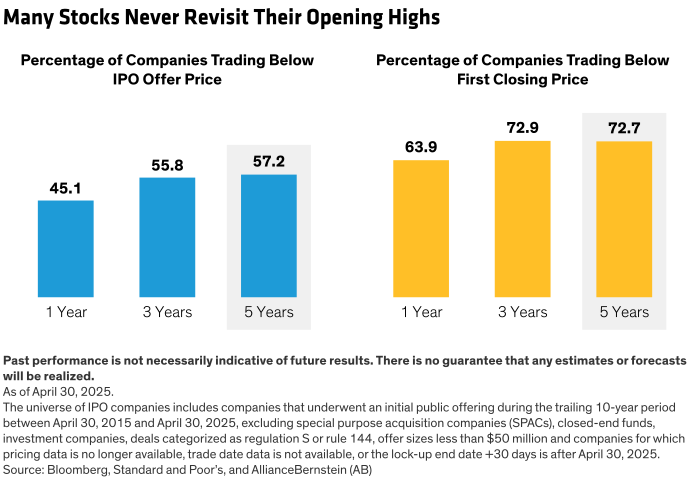
Anchoring also creates a push-pull dynamic that can paralyze investors. If the stock keeps climbing, selling feels like leaving gains on the table. But if it slips, selling feels like surrender. Many prefer to hold on, hoping for the price to revisit its former heights. Yet when we looked at IPOs over the last 10 years, more than half of the companies traded below their IPO price after five years while nearly three quarters traded below their initial price on the first trading day (Display).
If you feel this way, know that you’re not alone. In fact, you could say you’re wired for it. Human instincts that once helped us avoid risk—like loss aversion, recency bias, attachment to what we already own—kick in when most of our net worth rides on a single stock. Not to mention the emotional weight of an ownership stake that represents years of hard work and identity. With these forces in the mix, diversification can feel like abandoning a climb before enjoying a better view. Fortunately, recognizing that framing is the first trail marker toward a better plan.
How Core Capital Guides Post-IPO Diversification
When emotion takes over, you need a fixed point to keep in sight. For most shareholders, that point is core capital. Think of core capital as the amount of diversified assets you’ll need to sustain your lifestyle over your lifetime, while withstanding elevated inflation and challenging markets with a high degree of confidence.
By focusing on core capital, you reframe the entire conversation. Instead of asking, “How high can this stock go?” you begin asking, “How much diversified wealth do I need to secure the lifestyle I want?” Those are two fundamentally different questions—and only one of them can be precisely quantified in advance.
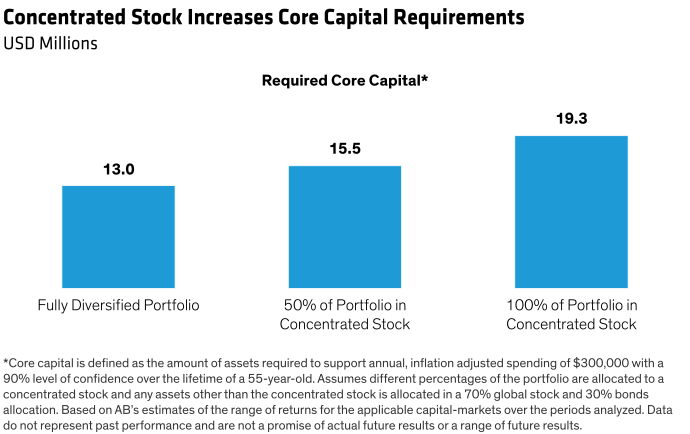
Notably, core capital tends to rise alongside concentration. Consider that a fully diversified portfolio has a core capital requirement of $13 million, but if half of the portfolio is invested in a concentrated stock, core capital jumps to $15.5 million (Display). Keep in mind, with core capital, bigger isn’t better; it means your portfolio must be nearly 20% larger to fund the same spending goals. In other words, the more your net worth is tied to a single stock, the bigger the base you need to offset that risk. A higher core capital figure may translate to working a few extra years, foregoing some lifestyle spending goals, or reducing your surplus capital.
Can You Diversify Without Nailing the Perfect Post-IPO Price?
Many shareholders hesitate for fear of selling just before another leg up. While understandable, the concern has two fundamental flaws: it tends to overstate the cost of diversifying at any point other than the exact top while understating the risk of ongoing concentration.
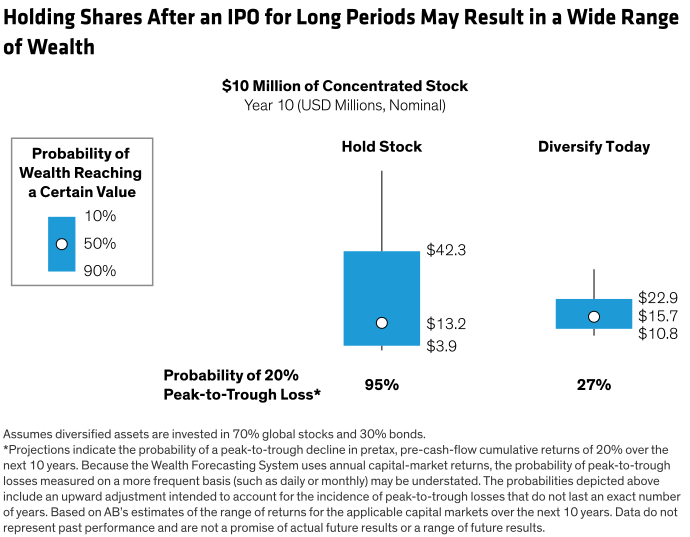
Waiting for the perfect moment usually fuels inaction. But our modeling suggests that investors would be better off contemplating a wide range of outcomes. While selling and diversifying may mean giving up some upside, the downside also needs to be factored in. Holding a concentrated stock risks the near certain chance the portfolio experiences a 20% loss at least once in a 10-year period (Display). Compare that to only a 27% chance of that same loss within a diversified portfolio.
Rather than aiming for the peak, explore a structured plan. That means diversifying gradually so no single price point carries undue weight or allows emotion to take the wheel. The cost of imperfect timing is often modest, and that way, a portion of your assets can still ride future waves. What’s more, shareholders can use certain income tax strategies to close the gap between a set plan and reaching for the peak price. In short, the benefit of discipline is considerable.
How Staged Selling Plans Help IPO Shareholders Diversify
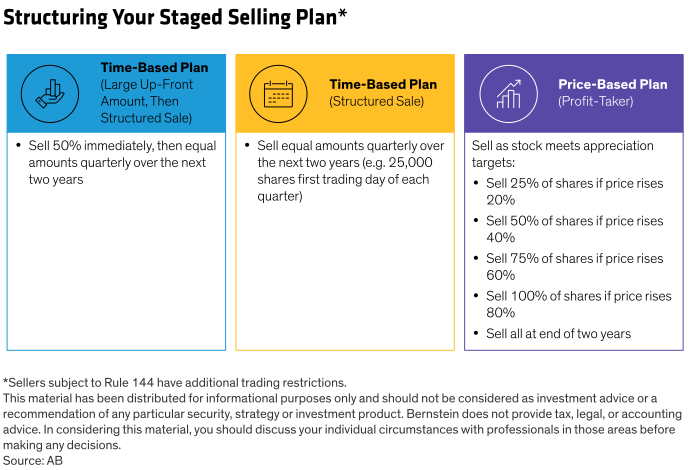
Historically, volatility tends to run highest when liquidity first becomes available. That’s why many shareholders lean on staged selling plans. These can be either formal 10b5-1 plans or informal guides that diversify over days, weeks, or months rather than at a single moment in time (Display).
Some plans use predetermined time intervals while others involve price targets or a combination of the two. Time-based sales steadily reduce concentration, while price-based accelerators can take additional chips off the table as the stock climbs. The specific design doesn’t matter as much as the discipline it imposes. By putting them in place from the outset, these markers keep you moving even when the switchbacks get steep—so decisions are governed by a thoughtful framework instead of fueled by fear, excitement, or regret.
For Post-IPO Diversification, Look Beyond the Summit
Shareholders often view an IPO as their final destination. But in reality, it’s a new trailhead. By understanding your core capital, separating security from surplus, and committing to a disciplined diversification process, you can resist the behavioral impulses and keep your decisions aligned with your goals. Instead of aiming to sell at the highest price, look to ensure the wealth you spent years building ultimately funds the life you want it to support.
The trail beyond the summit is the one few shareholders contemplate—and the one where good planning matters most. Reach out to a Bernstein Advisor for help before setting out.